Blog

  • The sexualisation of women and what is art, really?

    For thousands of years, we had worshipped women. Our ability to create and sustain life were something to be lauded. We were powerful and some religions held women in great regard. The lines of inheritance passed through women, because let’s face it, you can never doubt who mothered a child.

    And then life changed. Other religions came into play, as powerful countries came into power and forced the pagans out. Women became chattels, owned possessions. No voice, no power. Our place in life changed and our belief in ourselves also.

    In the early 1900’s the suffragette movement stole back our voice, but women had taken a back seat for so many hundreds of years that our power had been diluted. Our ability to give life became something slightly shameful, even if the end result was something we could be proud of.

    Our bodies were no longer solely our own. Men held claim to it and we were objects to be owned. It feels that, as a culture, we have not gotten over this mentality yet, despite the feminist movement. Our bodies are still seen by some as shameful and no conversation is held with our daughters about the beauty of curves. Women have their genitalia cut off, the unclean parts removed, leaving behind a hole for a man’s use only. We rail against the unjustness of this and yet, plastic surgeons in our own countries practise removal of labia minora for cosmetic reasons. Does the addition of anaesthetic and a medical degree change what is being done?

    Our power, that had once been held in such high regard was tattered and torn. Some we scraped back together, but most disappeared in the face of change. Accompanying that came the sexualisation of women. Breasts that were designed to nurture our babies became the symbols of lust and were flashed across billboards throughout the world. Yet women are still victimised for breastfeeding a baby in a public area. ‘I don’t want to see that’ is spat, in disgust, while a bikini clad model flashes across the screen above their heads.

    The dirtiness associated with vaginas hasn’t faded. Tucked away under panties most of the time, when seen in media it is nothing more than a tiny pink slit, hairless like a child – the power of a woman airbrushed out of it.

    And so I celebrate pieces of artwork that desexualise vulvas. Artwork that show beauty and individuality, even as others claim that vulvas are not meant to be seen or looked at.

    I’ve spoken to people who left MONA a little shell shocked, certain that some works in there can’t possibly be considered art. The canvas depicting a man being fucked by a dog caused a bit of consternation, surely that wasn’t art? Yet, in the same gallery sits Leda and the Swan, a globally acclaimed bronze that depicts Leda being fucked by a swan. The conversation turned to the fact that women are the ones who are meant to be fucked, not men. That is the reason the canvas is considered distasteful, and the bronze is not.

    By the nature of a womans vulva, intercourse became something that was done to us, not something we did. Men are the fuckers and women are the fuckees. In reality, it doesn’t always work like that and personal circumstances and sexuality will change with every relationship, but the cultural shift was there and unchangeable.

    This of course proves my point about sexualisation.

    Art doesn’t have to be beautiful. Art can be a statement about the world around us, or culture. It can be ugly. It can be a machine that turns food into fecal matter, a dig at the art world itself, a claim that all artwork, is, in the very end, crap.

    Art is meant to make us think and in this day and age of overexposure to media and pornography, sometimes that art needs to be shocking to make its point. I don’t think this is a bad thing, merely the equivalent to shaking someone by the shoulders to get them to listen properly.

    MONA doesn’t shrink away from the artwork that other galleries refuse to hang and in the end, if all it does is make us question our perception of our culture, then that can only be a good thing.

    I for one, like questioning why we think the way we do and why we, the collective we, are so ready to accept some things as beautiful and declare others to be shameful.

    Look at what vaginas can do afterall.
  • Vaginas, labiaplasty and why I think teenage girls ought to look at more than just porn for their body image ideas.

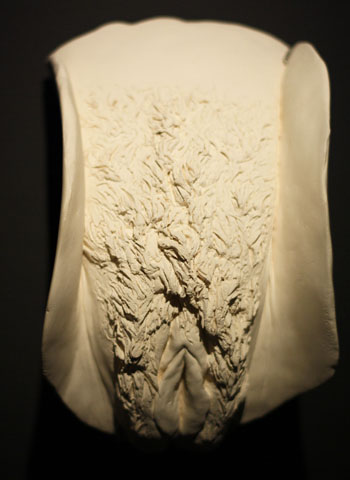
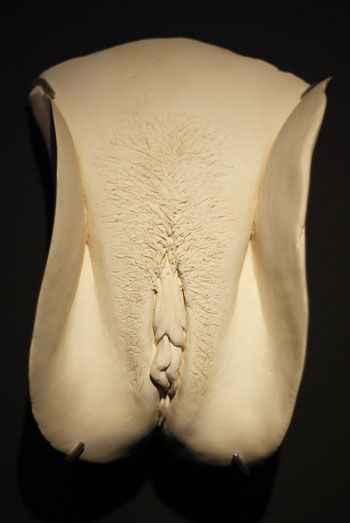
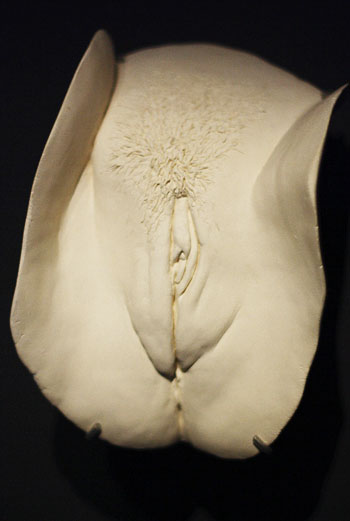
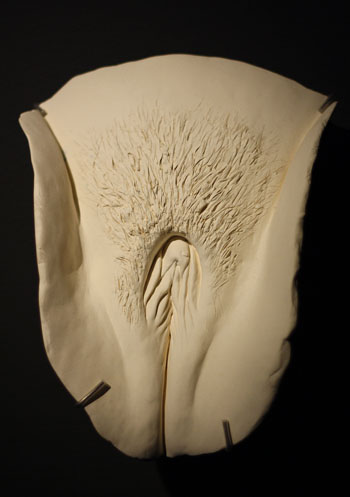
    Slightly NSFW, no actual photos of vaginas here, but there are photos of ceramic vaginas, all white. Just so you know.

    ***

    A few months ago I was watching an SBS documentary about teenage girls and their body issues relating to their vagina*. Most of the girls spoken to were ones about to undergo labiaplasty – most notably a reduction in the size of their labia minora.

    I was a bit astounded at girls wanting to cut their vagina to pieces, just to make it ‘neater’ or ‘prettier’.

    We followed their journey and by all accounts, none of the girls regretted the surgery. We won’t talk about lost nerve endings, or loss of sensation or any of the other things that they might have and not know about. How do you tell when something is missing?

    Part of the problem, I think, is that women don’t get to see vaginas very often. Of course, we’ve all probably had some access to porn, but porn stars aren’t exactly portrayals of real female beauty anyway, are they? Not to mention I’m hearing rumours that a good portion of porn stars have had labiaplasty anyway, and that girls in magazines have their vaginas airbrushed, so that only the labia majora can been seen.

    The documentary stayed with me, rattling around in the back of my brain where I keep my ‘issues to get upset about when I’ve got time’ folder.

    When I went to MONA, I was thrilled to pieces to see a wall of vaginas. All shapes and sizes, wobbly labia and all.

    Called ‘Cunts… And Other Conversations’ by artist Greg Taylor and friends, it contains 150 sculpted vaginas, all different and all brilliantly done.

    Models ranged in age from 18 to 78 and came from all kinds of religious backgrounds.

    Xanya Mamunya is a harpist who features among the works. She says of the modelling process, “It was empowering because I am from a generation that never even looked down there. I wasn’t even told about the menstrual cycle until I thought I was bleeding to death. Modelling for the exhibition made me feel that I was part of something that I think is very important – for everyone.”

    It’s a bit disconcerting to walk along a hallway whose main feature is something we’re taught not to look at too closely, but it was also really interesting. Like penises, no two vaginas are the same and honestly, I’m not sure why we’d expect them to be.

    Sadly it would seem that glossy magazines have been our go-to guide for women to try and discover what is normal, and glossy magazines are about as far removed from reality as you can get.

    I think that every teenage girl should get to look at the huge range of normal, because looking at Cunts… And Other Conversations, all I am struck by is that there is no such thing as normal. We’re all unique and that can only be a good thing.

    My only complaint is that we need a sister exhibition of 150 penises, to showcase ‘normal’ for men.

    *Yes, I know the technical term is vulva, but I found it easier to use ‘common language’ for this post.

  • Photos from the VIP opening of MONA

    Sadly I didn’t take as many photos as I would have liked to, I was too busy trying to absorb the artwork by osmosis.

    However, I got permission today to publish what I did take photos of, so I can share what I’ve got. I will definitely be taking my camera in when I go again (and again, and again – I may have a small Mona addiction).

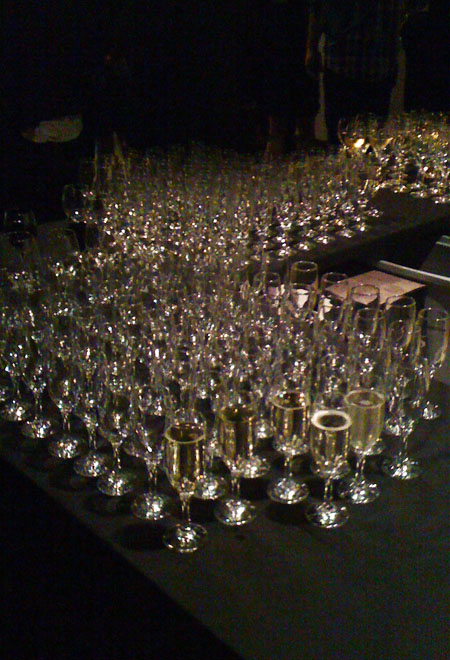
    Probably less than a quarter of the wine that was on offer. A few hours later, there was still plenty of alcohol, but no clean glasses.

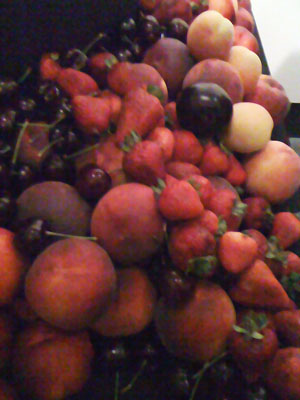
    A minuscule portion of the fruit tables.

    There were too many people to photograph much of the food, which in hindsight was a shame. But that’s okay.

    The artwork is equally stunning.

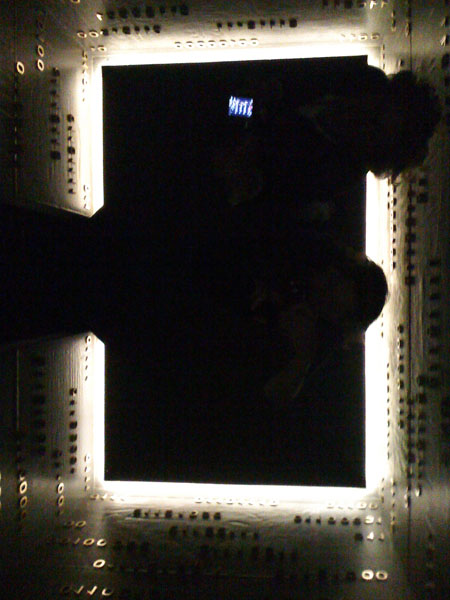
    A room called Kryptos, dimly lit with a mirrored roof and binary code along the walls. I loved it.

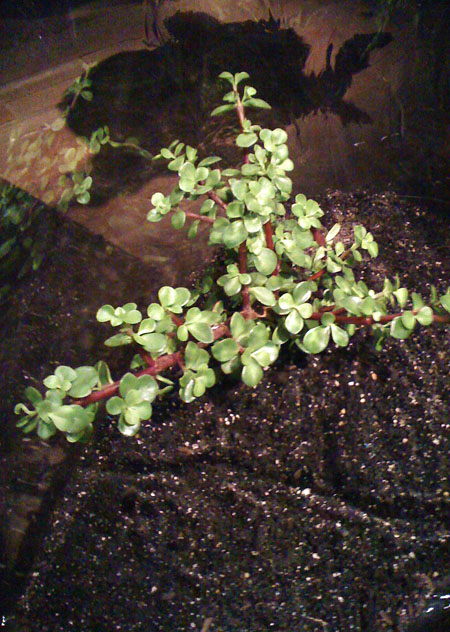
    Plants in hanging glass baskets – I suspect half of the art here is in the shadow they cast.

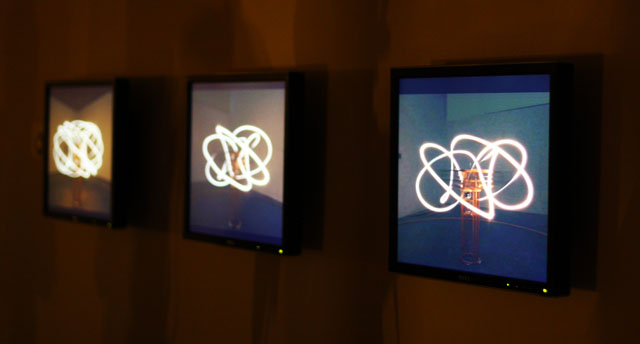
    Loop System Quintet, 2005. Conrad Shawcross – mechanical arms that spin and paint with light – the machines spin to the left and the art they produce is shown on the opposite wall. One motor, one axle, five machines spinning at the same time, with a lightbulb on each of them that spins at different speeds.

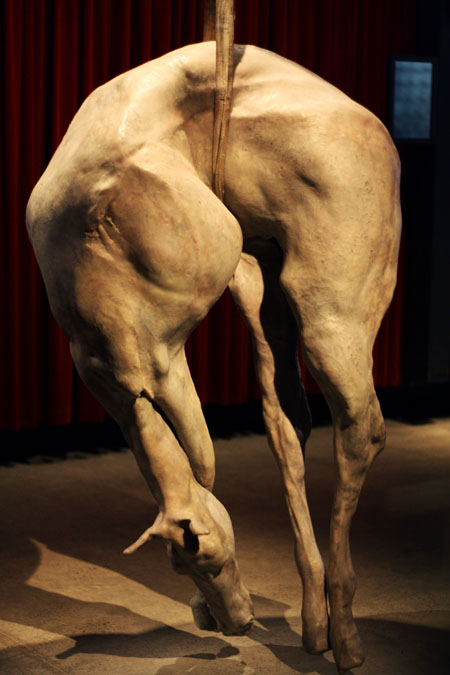
    And this is the only photo I took in the ‘Sex and Death’ exhibit. P XIII 2008 Berlinde DeBruychere

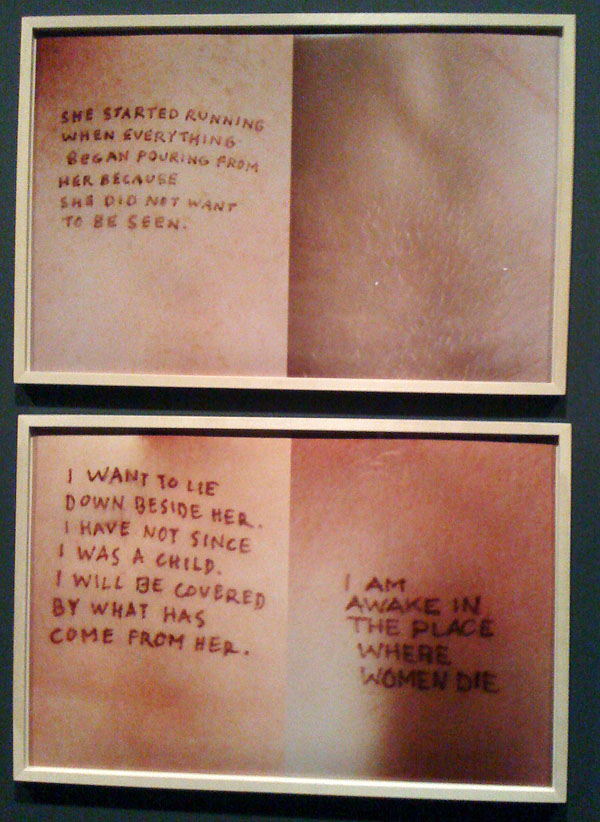
    Lustmord 1994. Jenny Holzer. I found these so beautiful. Words written on the backs of people and photographed. Ten sets of four each.

    Thank You to MONA for allowing me to publish photos. Artist information will be added shortly, as soon as I can get hold of it.

  • Tasmanian Times

    My thoughts on MONA FOMA and the Mona opening are up on the Tasmanian Times now.

    You can see the article here.

    There are four very different perspectives, mine is the final one.

    Thanks to Lindsay Tuffin for publishing it for me.

  • MONA opening. Also, say yes to parties thrown by millionaires.

    Trying to find the words to write about the Mona opening is like stammering adjectives and spluttering lots. I’m a writer, but I’m having trouble articulating what the entire experience was like. Surreal comes to mind – and I know surreal is a word overused, but surreal is about all I can drum up.

    Thanks to ABC radio and our titles of ‘Micro Critic’ we got tickets to the VIP opening, the giant party thrown by millionaire David Walsh. I was already a bit stunned by the socialite dresses and name dropping going on around me, so I shouldn’t have been shocked to see upwards of 80 lobster tails on a rotisserie as I headed down to the tennis courts and museum entrance. Glasses of champagne were handed out as we walked past and I, for the first time in a long time, had a drink as we walked.

    Once inside the museum, we collected our O Device (an iPod touch, uploaded with Mona software) and walked down three stories of stairs into the depths of the museum. Open rock faces had been left exposed and I was stupidly pleased about that. There is something about the beauty of sandstone walls that makes me happy.

    I’m not sure what I was expecting, but a giant party in the foyer area probably wasn’t it. Maybe trays of hors d’oeuvres and a glass of wine before we walked around, but the scale of the catering left me a bit shocked.

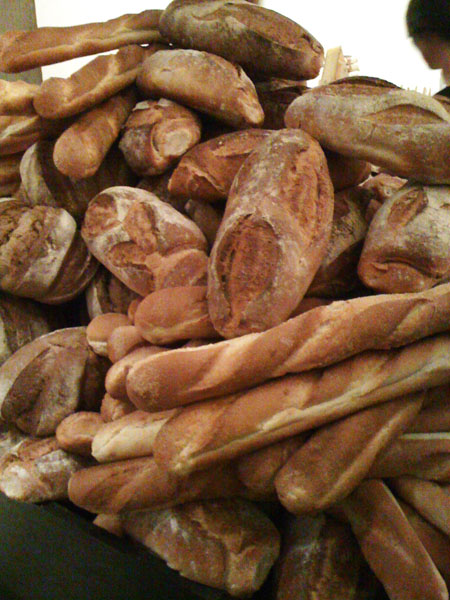
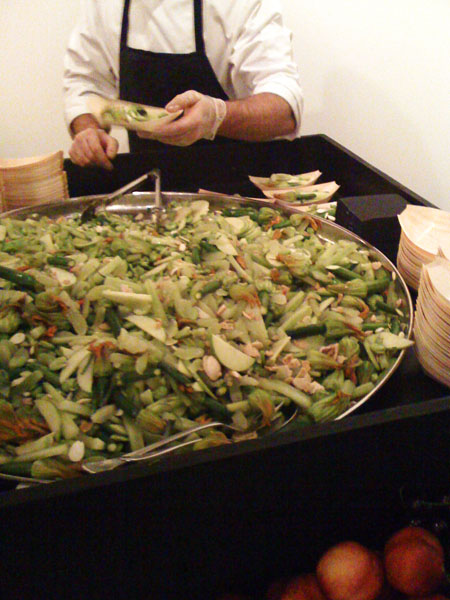
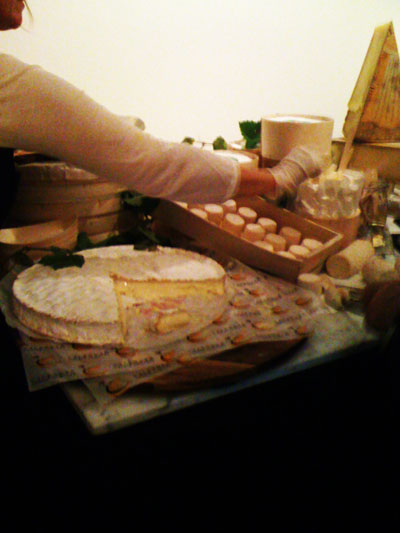
    I have expensive tastes, on a bread and butter budget. Even this was beyond what I’d expected. Tables filled with wine glasses waiting to be filled. An open bar with every conceivable drink you could want. A table piled high with nothing but fresh bread and a table next to it with cheeses. Salads served in paper cones, dished up from giant silver bowls. Prosciutto sliced in front of you. A giant blue fin tuna, just sitting on ice – an accompaniment to the finest sashimi. Hundreds of oysters on ice. Russian caviar worth $200 for 25g, being handed out on spoons and washed down with good vodka shots (that I declined).

    Like I said, astounding. Really, for me, a once in a lifetime experience.

    The museum is indescribable. Sex and death combine with art to create something that is offensive, shocking, breathtaking and brilliant. I wasn’t offended, but the wall of vaginas appeared to upset some of the men. 151 vaginas were modeled, while a master carver carved them (we think in wax, but it’s a bit unclear) and then cast them to display. The effect is astounding, as you walk down a hallway with a line of vulvas looking at you.

    Personally, that was one of my favourite exhibits and something that every teenage girl should see. The range of normal is beautiful and not something we get to see often. I think it does however need a companion work of 151 penises, but that’s my bias coming through.

    I loved it. The whole experience was something I doubt I’ll get to repeat ever again and I am intensely excited at the thought of showing it all to Nathan, who is staunchly anti-artwank and who is looking forward to seeing it.

    Even more than that, I am really interested to see what this does for Tasmania as a whole. We’ve now got one of the best private museums in the world and I couldn’t be more proud.

    I ended up getting to chat to some very interesting people, care of introductions from Stephen Estcourt. The very lovely Lindsay Tuffin and Richard Flanagan for starters. Both incredibly interesting men that I’d look forward to talking with again. I’m a fan of both of their work, Lindsay’s website is excellent and Richard’s writing, well. Brilliant comes to mind. I also met Leo Schofield and his wife, who are both lovely.

    I also talked to Kylie Kwong for a bit too and did an excellent job of not fangirling at her.

    It’s going to take a while to be able to fall back into real life after this. We’re on the radio again on Monday – 8.40am, live as far as I know. You can listen to that live streaming with this link.